

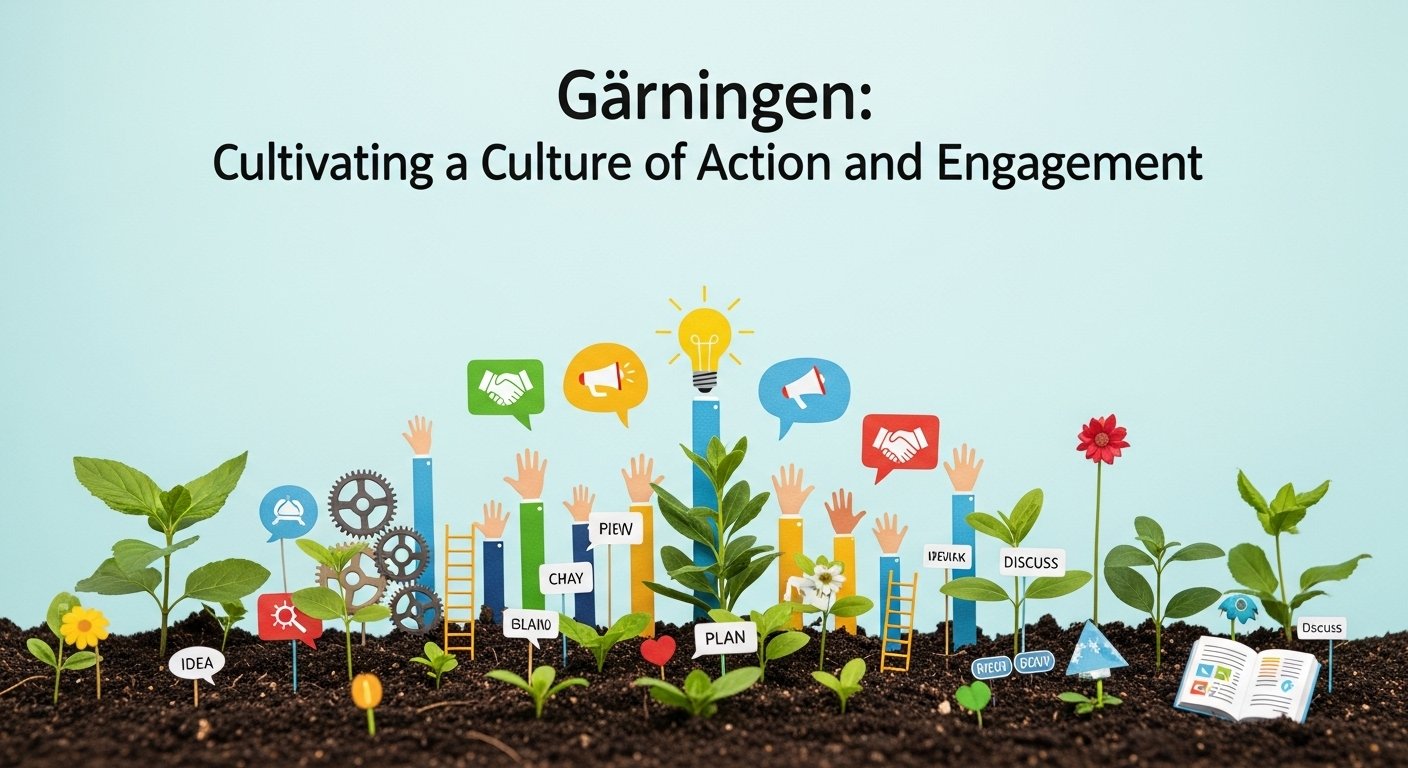
Gärningen represents more than a word; it embodies a philosophy rooted in purposeful action, responsibility, and collective engagement. In an era where ideas travel faster than execution, the concept of Gärningen stands as a reminder that meaningful progress begins when thought transforms into action. Across social, organizational, and cultural landscapes, this principle has gained recognition for its ability to inspire accountability and participation without coercion. As communities and institutions search for sustainable ways to motivate people, Gärningen offers a framework that encourages individuals to act intentionally while remaining deeply connected to shared values.
The growing interest in Gärningen reflects a global shift toward outcome-driven engagement. Rather than focusing solely on plans or intentions, this approach highlights the importance of doing, contributing, and reflecting. It resonates strongly in workplaces, education systems, and civic initiatives where action defines impact.
Understanding the Concept of Gärningen in Modern Contexts
At its core, Gärningen centers on the idea that actions carry meaning beyond their immediate results. Each action contributes to a broader narrative of responsibility and engagement. In modern contexts, this philosophy aligns closely with behavioral psychology and social innovation, emphasizing intrinsic motivation over external pressure.
The relevance of Gärningen today is amplified by digital transformation. While technology enables instant communication, it can also dilute accountability. The concept acts as a counterbalance, reinforcing the importance of deliberate effort and follow-through. Whether applied to leadership, community development, or personal growth, Gärningen fosters a mindset where individuals recognize their role in shaping outcomes.
Key Interpretations of Gärningen Across Fields
| Field | Interpretation of Gärningen | Practical Outcome |
|---|---|---|
| Education | Learning through active participation | Improved retention and engagement |
| Business | Accountability through decisive execution | Stronger team performance |
| Social Development | Collective responsibility for change | Sustainable community initiatives |
| Personal Growth | Intentional daily actions | Long-term habit formation |
This table illustrates how the concept adapts across different domains while maintaining its foundational emphasis on action.
Gärningen as a Framework for Cultural Transformation
Cultural transformation often fails when it relies on abstract ideals without practical pathways. Gärningen provides a bridge between values and behavior. By encouraging visible, consistent actions aligned with shared principles, it enables cultures to evolve organically rather than through enforced rules.
Organizations that embrace this mindset tend to experience stronger alignment between leadership and employees. Instead of directives imposed from the top, actions emerge through shared understanding. This participatory culture reduces resistance and builds trust, making change more resilient over time.
The Role of Gärningen in Leadership and Governance
Leadership grounded in Gärningen prioritizes example over instruction. Leaders who act consistently with stated values inspire credibility and loyalty. This approach reshapes governance structures by emphasizing transparency and responsiveness.
Rather than focusing on authority alone, leaders guided by this philosophy view action as a form of communication. Every decision, response, or initiative sends a message to stakeholders. When actions consistently reflect declared intentions, engagement increases naturally.
Comparative Leadership Approaches
| Leadership Style | Focus | Engagement Level |
|---|---|---|
| Directive | Control and compliance | Moderate |
| Visionary | Long-term goals | High but variable |
| Action-Centered | Consistent execution | Sustained and stable |
The action-centered approach closely aligns with the principles of Gärningen, highlighting its effectiveness in real-world leadership.
Gärningen in Organizational Environments
Modern organizations face challenges such as disengagement, burnout, and lack of ownership. Gärningen addresses these issues by shifting attention from outcomes alone to the quality of actions taken. Employees become contributors rather than task executors.
This philosophy encourages decentralized decision-making. When individuals understand the purpose behind actions, they feel empowered to take initiative. Over time, this creates a culture where innovation emerges naturally, driven by engaged participants rather than rigid hierarchies.
Educational Applications of Gärningen
In education, Gärningen transforms passive learning into active exploration. Students are encouraged to apply knowledge through real-world actions, reinforcing understanding and relevance. This approach aligns with experiential learning models that emphasize doing as a pathway to knowing.
Educators adopting this mindset often report increased curiosity and collaboration among learners. By focusing on meaningful engagement rather than rote performance, learning becomes a shared journey rather than a transactional process.
Social Impact and Community Engagement Through Gärningen
Community initiatives thrive when individuals feel their actions matter. Gärningen reinforces this belief by framing participation as a meaningful contribution rather than an obligation. This perspective fosters long-term involvement and reduces reliance on external incentives. Grassroots movements often succeed when guided by this principle. Small, consistent actions accumulate into significant impact, strengthening social bonds and collective identity.
Community Engagement Metrics
| Engagement Factor | Traditional Approach | Gärningen-Inspired Approach |
|---|---|---|
| Participation | Event-based | Continuous involvement |
| Motivation | External rewards | Intrinsic purpose |
| Sustainability | Short-term | Long-term |
The contrast highlights how action-oriented engagement creates lasting community value.
Psychological Foundations Behind Gärningen
The effectiveness of Gärningen is supported by psychological research on motivation and behavior. Self-determination theory suggests that autonomy, competence, and relatedness drive sustained engagement. This philosophy naturally integrates these elements by encouraging self-directed action within a shared context. When individuals see the tangible effects of their actions, motivation increases. Feedback loops formed through visible outcomes reinforce positive behavior, creating a cycle of engagement and growth.
Challenges in Implementing Gärningen
Despite its strengths, implementing Gärningen is not without challenges. Resistance may arise from deeply ingrained habits or fear of accountability. Transitioning from intention-based cultures to action-centered ones requires patience and consistent reinforcement.
Clear communication plays a crucial role in overcoming these barriers. When stakeholders understand the purpose behind actions, alignment improves. Gradual implementation allows individuals to adapt without feeling overwhelmed.
Measuring the Impact of Gärningen
Measuring action-based cultures requires qualitative and quantitative approaches. Traditional metrics may not fully capture the depth of engagement. Observing behavior patterns, collaboration levels, and initiative frequency provides richer insights.
Evaluation Indicators
| Indicator | Measurement Method | Insight Provided |
|---|---|---|
| Initiative Frequency | Activity tracking | Ownership levels |
| Collaboration Quality | Peer feedback | Cultural alignment |
| Outcome Consistency | Performance reviews | Sustainability |
These indicators help organizations assess the effectiveness of action-driven cultures.
Future Perspectives on Gärningen
As societies face complex challenges, the need for action-oriented engagement will continue to grow. Gärningen offers a timeless yet adaptable framework that resonates across cultures and contexts. Its emphasis on responsibility and participation aligns with emerging trends in decentralized leadership and collaborative innovation. Looking ahead, this philosophy may play a central role in shaping how organizations, communities, and individuals respond to uncertainty. By prioritizing meaningful action, it encourages resilience and shared purpose.
Conclusion
Gärningen stands as a powerful reminder that progress is built through deliberate action and sustained engagement. By bridging the gap between intention and execution, it fosters cultures where individuals feel empowered to contribute meaningfully. Whether applied in leadership, education, or community development, this philosophy offers a practical pathway toward lasting impact. As the world continues to evolve, embracing action as a core value may prove essential for building resilient and engaged societies.